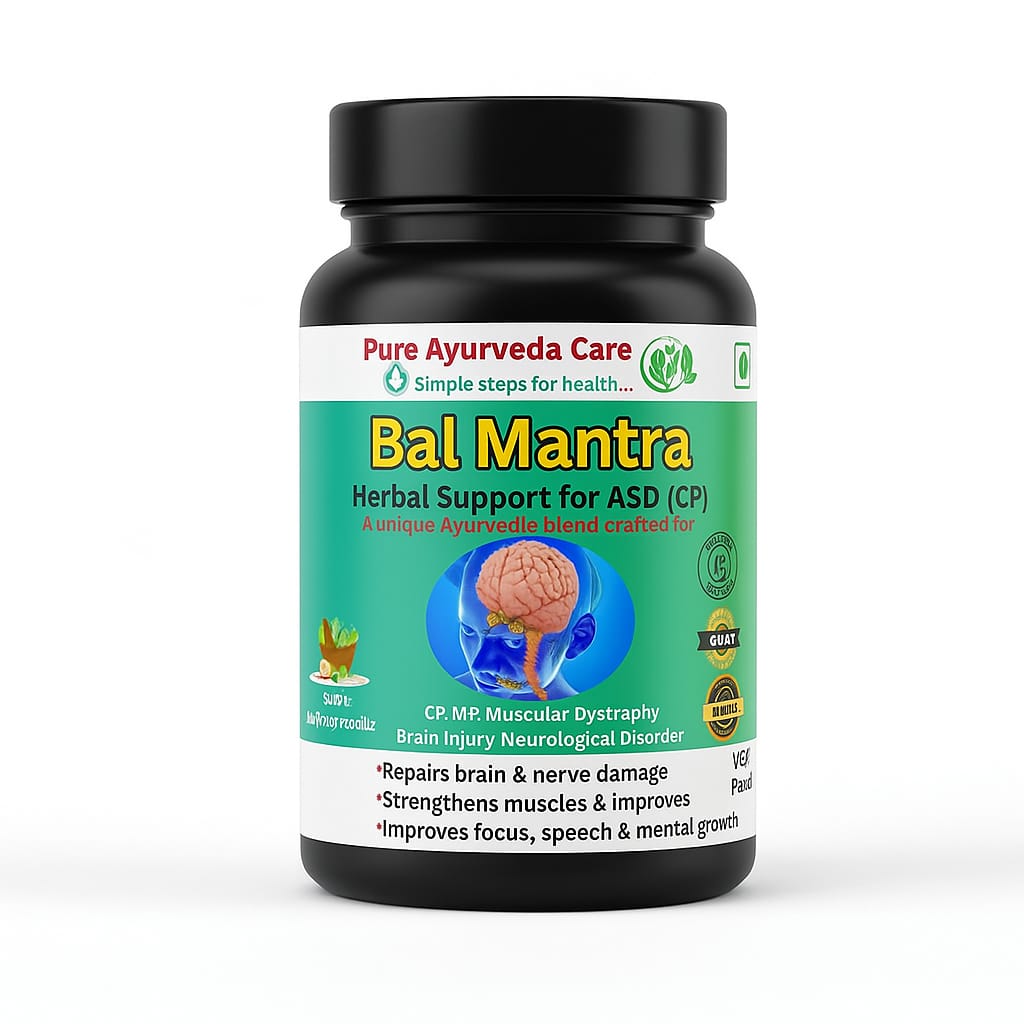
- Discount up to 35% for first purchase only this month.
- pureayurvedacare@gmail.com
- +91 8376956429

Cerebral Palsy (CP) is an umbrella term that refers to various conditions which impair a person’s ability to move and coordinate the muscles in their body and also control their posture and other bodily functions. Cerebral Palsy develops as a consequence of injury to the brain during its formation. Such injuries can lead to a wide range of disabilities which can be either mild or severe.
Each patient suffering from cerebral palsy is individual and can vary in their capabilities and the extent of the symptoms. Thus, some CP patients have independent movement, and some need to use various aids to move and to perform their daily activities. This makes it necessary to create a unique rehabilitation program for each patient.
Cerebral palsy rehabilitation allows developing the skills and capabilities of patients and simplifies the activities of their daily life.
Medical disclaimer: This article is for general educational purposes. It does not diagnose, treat, or cure cerebral palsy. Parents and caregivers should consult qualified healthcare professionals for an individualized evaluation and treatment plan.
Cerebral palsy refers to a group of permanent conditions that affect movement and posture because of disturbances in the developing brain. These disturbances can occur before birth, around the time of birth, or during early childhood.
Although the brain disturbance itself does not progressively worsen, the physical effects of CP can change as a person grows. Muscle stiffness, joint problems, pain, mobility limitations, and other complications may require ongoing monitoring and treatment.
CP does not look the same in every person. One child may have difficulty using one side of the body, while another may experience stiffness in several limbs. Some people may also experience difficulties with speech, swallowing, vision, hearing, learning, or seizures.
The word cerebral relates to the brain, while palsy refers to weakness or problems with movement.
The name therefore describes a condition in which a problem affecting the developing brain leads to difficulties with movement and muscle control.
Cerebral palsy can result from abnormal brain development or damage to the developing brain. In many cases, however, doctors cannot identify one specific cause.
Possible contributing factors include:
Importantly, CP does not always result from complications during delivery. The underlying causes can be complex, and families should avoid blaming themselves or assuming that one event caused the condition without medical evidence.
A risk factor can increase the likelihood of a condition, but it does not mean that the factor definitely caused it.
For example, premature birth can be associated with an increased risk of neurological complications, but not every premature baby develops cerebral palsy.
A qualified medical team can evaluate a child’s history, development, examination findings, and investigations to understand the situation more accurately.
Healthcare professionals commonly describe CP according to the movement pattern and body areas affected.
Spastic CP is characterized by increased muscle stiffness or tightness. Movements may become difficult because muscles resist stretching.
A person may experience:
Spastic CP is the most commonly recognized movement pattern.
Dyskinetic CP involves involuntary movements. A person’s muscle tone may change between being too tight and too loose.
Movements may affect:
Ataxic CP primarily affects balance and coordination. People may experience shaky movements, difficulty maintaining balance, or problems with precise movements.
Some individuals show characteristics of more than one movement type. Healthcare professionals may therefore describe their condition as mixed cerebral palsy.
Signs of cerebral palsy often become noticeable during infancy or early childhood rather than immediately after birth.
Possible signs include:
Some children may also experience feeding, swallowing, communication, vision, hearing, or learning difficulties. Seizures can also occur in some people with CP.
Parents often become concerned when a child takes longer than expected to sit, crawl, stand, walk, speak, or use their hands.
A developmental delay does not automatically mean that a child has cerebral palsy. Several conditions can cause developmental delays.
If a child is not meeting expected milestones or shows unusual movement patterns, parents should discuss their concerns with a pediatrician or appropriate healthcare professional.
There is no single test that confirms every case of cerebral palsy.
Doctors generally consider:
An MRI scan may help healthcare professionals understand changes in the brain. Depending on symptoms, doctors may also recommend tests such as an EEG, particularly when seizures are suspected.
A child may be evaluated by several specialists, such as a pediatric neurologist, developmental pediatrician, physiotherapist, occupational therapist, speech and language therapist, ophthalmologist, or other healthcare professionals.
Early assessment can help families understand a child’s developmental needs and begin appropriate support.
Early intervention does not mean that every child will have the same outcome. Instead, it allows healthcare professionals and caregivers to identify practical goals and provide support as early as appropriate.
There is currently no cure that removes cerebral palsy, but many treatments and rehabilitation services can help people manage symptoms, improve function, prevent complications, and participate more independently in everyday life.
Treatment depends on:
Physiotherapy can help maintain and improve movement, strength, flexibility, balance, and functional abilities.
A physiotherapist may recommend:
The goal should be realistic and individualized rather than based on promises of a complete cure.
Occupational therapists help people improve their ability to perform everyday activities.
Therapy may focus on:
Occupational therapy can also help improve independence and participation.
Speech and language therapy can support children and adults who have difficulties with:
Some individuals may benefit from alternative communication methods, including pictures, signs, communication devices, or speech-generating technology.
Rehabilitation plays an important role in cerebral palsy management.
The World Health Organization describes rehabilitation as a set of interventions designed to optimize functioning and reduce disability. Rehabilitation can help people participate more independently in education, work, family life, recreation, and other meaningful activities.
For someone with CP, rehabilitation may involve a multidisciplinary team.
Depending on individual needs, the team may include:
The team can work with parents and caregivers to establish realistic goals.
For example, instead of focusing only on “walking,” a rehabilitation goal might be helping a child safely move from a chair to the floor, participate in school activities, communicate effectively, or become more independent during meals.
Doctors may recommend medicines or medical procedures when symptoms such as muscle stiffness, pain, seizures, sleep problems, constipation, or excessive drooling affect daily life.
Depending on the individual’s needs, treatment may include medicines for muscle stiffness, anti-seizure medicines, interventions for drooling, or other symptom-specific treatments. Some people may also benefit from botulinum toxin injections or surgery for selected complications.
These treatments should only be used under appropriate medical supervision.
Parents should not start, stop, or replace prescribed treatment without discussing it with the treating healthcare professional.
Similarly, supplements, herbal products, or alternative therapies should not be promoted as replacements for evidence-based medical care.
If a product claims to cure cerebral palsy, reverse brain damage, or guarantee recovery within a specific period, consumers should be cautious. Google specifically identifies unproven cure claims for incurable medical conditions as unreliable health claims in its advertising policies.
Nutrition can become an important part of care when a person has difficulty chewing or swallowing, has poor appetite, or struggles to maintain adequate nutrition.
Some people with CP experience swallowing difficulties that can increase the risk of choking or respiratory complications. Long-term feeding problems may also contribute to inadequate nutrition.
A healthcare professional can assess feeding and swallowing concerns and recommend appropriate strategies.
Parents should seek professional advice if a child frequently:
Parents may first notice CP when their child develops movement skills differently from other children.
However, children develop at different rates, and one delayed milestone does not automatically indicate cerebral palsy.
Parents should consider professional evaluation when they observe persistent concerns such as unusual muscle tone, significant movement asymmetry, delayed motor development, or unusual involuntary movements.
Parents can support their child by:
Most importantly, children with CP should be encouraged to participate in age-appropriate play, learning, social interaction, and family activities.
A child’s abilities should not be defined only by their diagnosis.
Parents and caregivers can focus on what the child can do, while providing appropriate support for areas that remain difficult.
Children with physical disabilities may sometimes experience social isolation, frustration, or difficulty participating in activities.
Families can help by:
A supportive environment can make an important difference in participation and independence.
Cerebral palsy is a lifelong condition, but a diagnosis does not determine a person’s potential.
Some people with CP live independently, attend mainstream schools, pursue higher education, work, build relationships, participate in sports, and enjoy active social lives.
Others may need substantial assistance throughout life.
The level of support required depends on the individual’s movement abilities, communication, cognition, associated medical conditions, environment, and access to appropriate services.
The goal of care should therefore extend beyond managing symptoms. It should also promote function, participation, independence, safety, communication, education, and quality of life.
Because cerebral palsy information is widely available online, families should carefully evaluate health websites and product claims.
Look for information that:
Google’s publisher policies prohibit harmful health claims that contradict authoritative scientific consensus and also address misleading representation.
For websites monetized through AdSense, publishers are responsible for the content appearing on pages where ads are displayed. Google also emphasizes unique, relevant content that provides value to users.
Cerebral palsy is a group of lifelong neurological conditions that primarily affect movement, posture, coordination, and muscle control due to disturbances affecting the developing brain.
There is currently no cure that eliminates cerebral palsy. However, treatment and rehabilitation can help manage symptoms, improve function, prevent complications, and support independence.
Yes. Some children with CP walk independently, while others may use walking aids or wheelchairs. Mobility varies considerably from one person to another.
Possible signs include delayed motor milestones, unusual muscle stiffness or floppiness, weakness, abnormal movements, poor coordination, and difficulty with balance.
Depending on the person’s needs, care may involve a pediatrician, pediatric neurologist, rehabilitation specialist, orthopedic specialist, physiotherapist, occupational therapist, speech and language therapist, and other professionals.
Physiotherapy can help maintain and improve movement, strength, flexibility, and functional abilities. It forms an important part of rehabilitation for many people with CP.
The original brain disturbance causing CP does not progressively worsen. However, physical effects and complications can change over time, so regular monitoring and appropriate treatment remain important.
Yes. Some people with CP experience difficulty controlling the muscles needed for speech. Speech and language therapy and alternative communication methods can help when appropriate.
Yes. Some individuals have feeding or swallowing difficulties. Professional assessment can help identify safer and more effective feeding strategies.
Parents should discuss any complementary or herbal product with their child’s healthcare professional before using it. Such products should not replace prescribed treatment or rehabilitation, and claims that a product can cure cerebral palsy should be treated with caution.
Cerebral palsy is a complex neurological condition that affects people in different ways. Understanding the condition can help families make informed decisions and seek appropriate support.
The most important points are:
Living with cerebral palsy can bring challenges, but appropriate healthcare, rehabilitation, accessibility, family support, education, and social inclusion can help people achieve meaningful goals.
If you are concerned about a child’s development or movement, speak with a qualified healthcare professional rather than relying solely on online information. Early assessment can help identify the child’s needs and connect the family with appropriate services.